
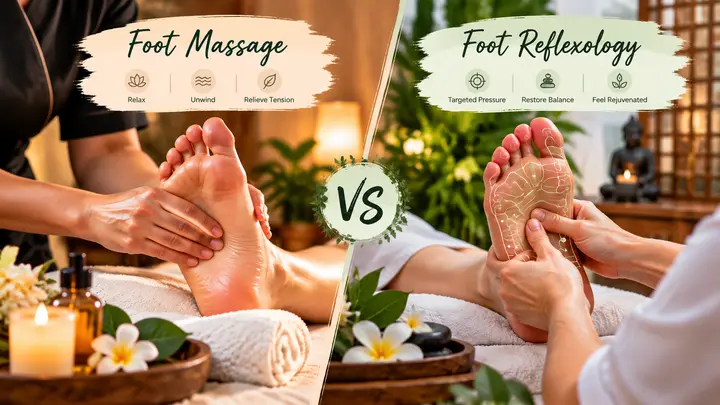
After a long day, tired feet usually need one thing: attention.
Maybe you spent the day standing at work. Maybe you walked around Santa Rosa, traveled for several hours, finished a workout, or simply stayed on your feet longer than usual. When you finally sit down, a foot massage sounds pretty good.
Then you start looking at treatment options and see two familiar names: foot massage and foot reflexology.
They sound similar because both involve hands-on work on the feet. But the techniques are not quite the same. A traditional foot massage works directly on the feet and surrounding soft tissues with movements such as kneading, rubbing, and pressure. Reflexology follows a more structured method that uses pressure on particular areas of the feet according to traditional reflexology techniques.
Neither one needs to be the “better” treatment. The more useful question is: what kind of session sounds good to you today?
Foot Massage vs. Foot Reflexology: A Quick Comparison
| Foot Massage | Foot Reflexology | |
| Main focus | Feet and soft tissues | Specific areas of the feet |
| Common movements | Kneading, rubbing, gliding, pressure | Thumb and finger pressure on selected areas |
| Style | Broad and flowing | More deliberate and structured |
| Often suits | Tired or tense feet, general relaxation | People who enjoy targeted pressure |
| Overall approach | Massage | Traditional reflexology |
There is some overlap. A foot massage can include firmer pressure, while a reflexology session can still feel deeply relaxing.
The main distinction comes from how the therapist works on your feet.
What Happens During a Foot Massage?
A foot massage gives the therapist freedom to work across the areas that feel tired or tense.
The session might include kneading the soles, rubbing the arches, working around the heels, gently moving the toes, or using circular movements around particular areas. Some treatments also include the ankles or lower legs.
Think about the feeling after a day of walking through a city. Your heels might feel worn out, your arches could feel tight, and your feet might simply feel heavy. A massage lets the therapist spend time working directly on those areas.
The pressure can also change during the session. The therapist might use lighter movements around sensitive areas and firmer pressure where your feet tolerate it comfortably.
What Does a Foot Massage Feel Like?
Most people associate foot massage with a steady, flowing rhythm.
The therapist moves from the toes to the soles, arches, heels, and other areas rather than staying on one point for a long time. Some people like gentle movements that help them unwind. Others prefer stronger pressure, especially around the arches or heels.
Communication makes a big difference here. Saying “a little lighter” or “more pressure there” gives the therapist useful information and helps keep the session comfortable.
For readers dealing specifically with tired feet, our guide to foot massage for tired feet covers the areas and techniques commonly associated with this type of massage.
What Is Foot Reflexology?
Reflexology takes a different route.
A practitioner applies pressure to particular areas of the feet according to traditional reflexology maps. These maps associate certain areas of the feet with other parts of the body.
That traditional theory deserves some context. Reflexology is widely used as a complementary wellness practice, but scientific evidence has not established that pressing a particular area of the foot can diagnose or treat a problem in a corresponding organ.
People still seek reflexology for many practical reasons. Some enjoy the concentrated pressure. Others like the slower, more deliberate rhythm or simply want to try something different from a conventional massage.
How Does Reflexology Feel?
The pressure can feel more specific than a regular foot massage.
Rather than moving continuously across the foot, the practitioner may spend more time working particular areas. Some people enjoy that sensation because it gives the session a clear rhythm. Others prefer the broad movements of a standard foot massage.
Neither style needs to hurt to be effective as a relaxing treatment. Letting the therapist know your comfort level helps them adjust the pressure.
What Is the Main Difference Between Foot Massage and Reflexology?
The easiest way to understand reflexology vs foot massage is to look at the purpose and technique rather than the names.
Foot Massage Works Directly on the Feet
The therapist works with the muscles and soft tissues of the feet. Kneading, rubbing, compression, and flowing movements can cover a broad area.
That makes foot massage a straightforward option for someone who wants their feet worked over from heel to toe.
Reflexology Uses a More Structured Method
Reflexology follows traditional maps of the feet and uses pressure on selected areas.
The session can feel more deliberate because the practitioner spends time on particular points instead of simply massaging the entire foot in the same way.
The Pressure Can Feel Different
A foot massage often moves smoothly from one area to another. Reflexology can involve shorter, more concentrated applications of pressure.
Of course, every therapist has a slightly different style. Two people can book the same type of treatment and come away with noticeably different impressions.
Which One Makes More Sense for Tired Feet?
Picture two situations.
After standing at work all day, your heels and arches feel worn out. You want someone to massage your feet, loosen the areas that feel tight, and let you switch off for a while.
A traditional foot massage fits that request naturally.
Now imagine that you have tried foot massage before and want something more structured. You enjoy having particular areas worked with your therapist’s thumbs and fingers, and you are curious about traditional reflexology.
That points more toward reflexology.
The decision becomes much easier when you start with how you want the session to feel, rather than trying to find a treatment that wins on paper.
Who Might Prefer a Foot Massage?
A foot massage can be a comfortable fit for people who:
- Spend long hours standing
- Walk a lot during the day
- Want broad work across the feet
- Enjoy kneading and flowing movements
- Prefer to adjust pressure throughout the session
- Simply want some quiet time to relax
It also makes sense for someone trying foot massage for the first time. There is nothing complicated to understand before the appointment. Tell the therapist where your feet feel tired and how much pressure feels comfortable, then settle in.
Who Might Enjoy Foot Reflexology?
Reflexology can appeal to people who:
- Like targeted pressure
- Enjoy traditional wellness practices
- Prefer a more structured treatment
- Want particular areas of the feet worked on
- Have already tried conventional foot massage and want something different
There is no need to believe every traditional claim surrounding reflexology to enjoy the treatment. Plenty of people simply like the technique, the quiet setting, and the sensation of having their feet worked carefully.
Can Foot Reflexology Include the Back, Shoulders, or Head?
That depends on the service.
Some reflexology appointments concentrate almost entirely on the feet. Others combine foot work with massage in additional areas.
At Jessie Jing Massage the pampered foot reflexology service includes work involving the arms, head, shoulders, and back, alongside the feet. That gives clients who arrive with more than just tired feet another option to consider.
The exact details can vary by session, so checking the service description before booking is worthwhile.
What Should You Tell Your Therapist Before the Massage?
You don’t need a long explanation. A few details can make the appointment much more comfortable.
Mention:
- How much pressure you normally enjoy
- Areas that feel particularly tired
- Any spot that feels sensitive
- Whether this is your first reflexology session
- Whether you want more attention on your feet or another area included in the service
Then keep communicating during the appointment.
There is nothing awkward about saying, “Could you use a little less pressure?” or “That feels good; you can stay there for a bit.” A good session should respond to your comfort rather than make you adjust to a fixed routine.
Foot Massage vs. Foot Reflexology for Relaxation
Both can fit into a relaxing day, but they create that feeling in different ways.
A foot massage has a familiar rhythm. The therapist works through the feet with continuous movements, and the session can feel easy to settle into.
Reflexology has more variation in pressure and location. Some people enjoy paying attention to those sensations because the treatment feels more deliberate.
Your mood can also play a part. After a physically demanding day, broad massage movements might sound appealing. On another day, trying a more structured technique could be exactly what you want.
A Note About Reflexology and Health Claims
You will find many articles online claiming that specific reflex points can treat problems in particular organs or systems.
It is worth treating those claims carefully.
Reflexology has a long traditional history, and many people use it as part of their wellness routine. However, research has not established the proposed foot-to-organ connections as a medical treatment system.
That does not take away from someone’s personal enjoyment of a reflexology session. It simply keeps the distinction clear between a relaxing complementary practice and medical treatment.
Persistent foot pain, swelling, numbness, or an unexplained problem deserves attention from an appropriate healthcare professional rather than a massage appointment alone.
Finding Foot Massage and Reflexology in Santa Rosa
For people around Santa Rosa, Jessie Jing Massage & Reflexology offers both foot reflexology and several massage styles. The studio is located in downtown Santa Rosa, and its service menu includes different foot reflexology options alongside Swedish, deep tissue, combination, couples, and chair massage.
So, Which One Should You Book?
Start with the simplest question: what sounds good to your feet right now?
After a long day standing or walking, a traditional foot massage can give tired areas broad, soothing attention. Someone who enjoys concentrated pressure and wants to explore a traditional reflexology method might prefer reflexology.
You don’t need to make the decision based on a list of promises or choose the treatment with the longest description.
Tell the therapist what brought you in, explain how much pressure you like, and mention the areas that need attention. From there, the session can be shaped around what actually feels comfortable.
Sometimes, that is all you need to turn a tiring day into a much more relaxing evening.
Frequently Asked Questions
Is foot reflexology the same as a foot massage?
No. They both involve hands-on work on the feet, but the techniques differ. Foot massage generally works across the feet and soft tissues with movements such as kneading and rubbing, while reflexology uses pressure on specific areas according to traditional reflexology methods.
What is the difference between foot massage and foot reflexology?
A foot massage focuses directly on the feet and uses broader massage movements. Reflexology follows a more structured approach and concentrates pressure on selected areas of the feet.
Which is better for tired feet, massage or reflexology?
It depends on what you enjoy. Foot massage offers broad work across tired feet, while reflexology provides a more targeted approach. Neither one is automatically the better option for everyone.
Does reflexology hurt?
It should not be something you have to tolerate through pain. Some areas may feel more sensitive when the therapist applies pressure, but you can always ask for a lighter touch or tell the practitioner that an area feels uncomfortable.
Can I get a foot massage and reflexology in the same session?
Some massage providers offer combination treatments or services that include both approaches. Ask what the particular session covers before making an appointment.
Can foot reflexology include the back and shoulders?
Some services include additional massage beyond the feet. Jessie Jing’s pampered foot reflexology service, for example, includes work on the arms, head, shoulders, and back along with the foot-focused portion.