
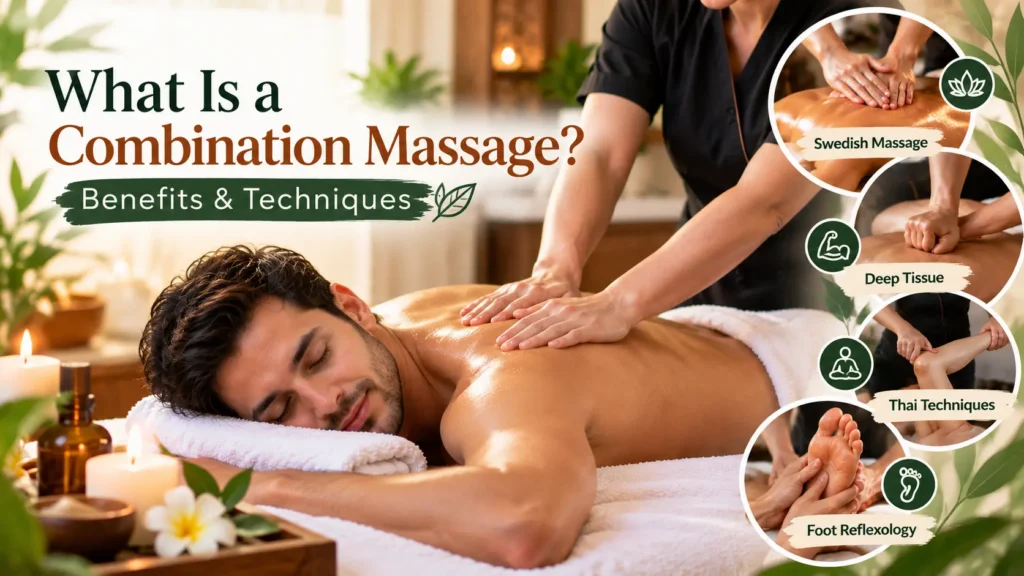
A relaxing massage and focused work on tight muscles don’t always have to be separate appointments. Depending on the treatment, you can experience both in one session through a combination massage.
A combination massage brings together two or more techniques, such as Swedish and deep tissue massage, or body massage with foot reflexology. The exact mix varies by spa, so don’t assume every package includes the same treatments.
Before booking, find out which techniques are included, whether you can adjust the pressure, and how the session time is divided. These details will help you choose a massage that suits your preferences.
What Is a Combination Massage?
A combination massage uses two or more massage techniques during one appointment. The therapist may follow a specific combination offered by the spa or adapt the session within the service’s scope to suit your preferences.
Unlike Swedish or deep tissue massage, which describe particular approaches to bodywork, combination massage is a broad term. Different spas use it to describe different treatments.
For example, one provider might combine Swedish massage with deep tissue techniques. Another might blend Thai-inspired stretching with oil-based massage. A third might use the term for a package that includes body massage and foot reflexology.
These treatments aren’t interchangeable. Before booking, check the service description or ask the therapist which techniques they use.
Which massage techniques can be combined?
The combination depends on the provider’s training, the treatment menu and what the session aims to offer.
Swedish and deep tissue massage
Swedish massage uses flowing strokes and kneading, while deep tissue massage applies slower, more focused pressure to selected areas. A therapist may use elements of both when a client wants a generally relaxing session with additional attention to a tight shoulder or back.
That doesn’t mean every combination massage includes deep tissue work. If you specifically want firm pressure, mention it when booking.
Thai massage and Swedish-style techniques
Some combination treatments bring together Thai massage techniques, such as assisted stretching and pressure-based movements, with the flowing strokes used in Swedish massage.
This approach may appeal to people who enjoy both hands-on massage and guided movement. However, Thai-inspired treatments vary, and you shouldn’t assume every version includes stretching, acupressure or hot stones.
Body massage and foot reflexology
Some spas offer a package that divides the appointment between body massage and foot reflexology. This differs from a treatment that blends techniques throughout the body.
At Jessie Jing Massage the menu lists a separate Foot & Body Combo with 30 minutes of foot reflexology and 30 minutes of body massage.
Other therapeutic techniques
Depending on the therapist’s qualifications and the service offered, a treatment may incorporate focused muscle work, trigger point techniques or stretching. These methods have different purposes, so their inclusion should make sense for the session rather than serve as a way to make the treatment sound more comprehensive.
How Does a Therapist Decide Which Techniques to Use?
A good combination massage isn’t simply a collection of techniques. The therapist needs to decide how to use the available time and which approaches suit your preferences.
Imagine that you’ve spent most of the week at a desk. Your shoulders feel tight, but you don’t want an intense, full-session deep tissue massage. You might prefer flowing strokes across your back, followed by more focused work around the shoulders, using pressure you find comfortable.
Now consider someone who wants to relax but also enjoys gentle stretching. That person may prefer a combination that incorporates movement rather than a treatment based entirely on oil massage.
These are different preferences, and neither requires the therapist to use every available technique.
Three factors help shape the session:
- Your main goal: Decide whether relaxation, focused muscle work, stretching or foot care matters most to you.
- Your pressure preference: Explain whether you prefer light, medium or firm pressure. A combination massage doesn’t automatically mean deep pressure.
- The time available: A shorter appointment gives the therapist less time to cover multiple areas. Choosing too many priorities can leave too little time for the one that matters most.
Tell your therapist what you’d like to get from the appointment rather than trying to prescribe a technique for every muscle. They can explain which options fit the service they offer.
What Happens During a Combination Massage?
The experience depends on the treatment, but you can expect a conversation about your preferences before the massage begins.
Before the session
Your therapist may ask which areas feel tense, how much pressure you prefer and whether you’ve had a massage before. Mention any injuries, recent surgery, medical conditions or movements that cause discomfort.
This conversation also gives you an opportunity to clarify what the service includes. If you booked a combination massage because you want stretching, for example, confirm that the selected treatment actually offers it.
During the massage
The therapist follows the planned combination of techniques. They might alternate between different strokes, spend more time on a selected area or divide the appointment between separate treatments, depending on the package.
You don’t need to tolerate discomfort to make the session worthwhile. Tell the therapist if the pressure feels too strong or a stretch feels uncomfortable. They can adjust their approach or stop that technique.
After the session
You may feel relaxed or notice that some areas feel less tense. Your experience will depend on the treatment, your preferences and how your body responds.
A combination massage doesn’t guarantee that every area of discomfort will improve after one appointment. If you experience unusual pain or symptoms that persist or worsen, seek appropriate medical advice rather than trying to work through them with more pressure.
What Are the Benefits of Combination Massage?
The main appeal is the opportunity to experience different approaches in one appointment. Whether that makes the treatment more useful depends on what you want from it.
You can combine relaxation with focused attention
Some people want the calming experience of a general massage but also want the therapist to spend extra time on one or two areas. A combination treatment may accommodate both preferences when its techniques support that goal.
You can choose a treatment that suits your preferences
If you enjoy stretching, focused pressure or foot reflexology, knowing which techniques a spa offers can help you select a suitable service. You can also explain what you don’t enjoy, such as very firm pressure or assisted stretching.
You can explore different approaches without booking separate sessions
When a treatment combines techniques within one appointment, you can experience those approaches without arranging separate visits. The trade-off is that the therapist must divide the available time between them.
More techniques don’t automatically produce better results. A session built around one clear priority may suit you better than a treatment that tries to cover too many things.
Massage may help some people manage pain or improve short-term comfort, but the evidence varies by condition. The National Center for Complementary and Integrative Health explains what research says about massage therapy and its limitations. Massage should not replace appropriate assessment or treatment for a medical problem.
Combination Massage vs. Swedish Massage vs. Deep Tissue Massage
The main difference lies in how the treatment is structured.
| Feature | Combination massage | Swedish massage | Deep tissue massage |
| Approach | Uses two or more techniques | Uses Swedish massage strokes | Uses slower, focused pressure |
| Pressure | Depends on the techniques selected | Often light to moderate, adjustable | Often firmer, but should remain tolerable |
| Session focus | Varies with the combination | General relaxation and bodywork | Selected areas of muscle tension |
| Best starting point | You want a mix of approaches | You prefer a flowing, relaxation-focused session | You want focused work on particular areas |
No option is automatically superior. Swedish massage may be enough if your main goal is relaxation. Deep tissue massage may suit you if you prefer focused pressure. Combination massage offers another option when you want more than one approach in the same appointment.
If you’re deciding between the two individual styles, our guide to deep tissue massage vs. Swedish massage explains their differences in more detail.
Is a Combination Massage Right for You?
Before choosing a treatment, think about what you want the therapist to prioritize.
A combination massage may suit you if:
- You enjoy relaxation-focused massage but want additional attention to a particular area.
- You like the idea of combining massage with gentle stretching, when the service includes it.
- You want to experience different techniques without booking separate appointments.
- You prefer a treatment that can accommodate more than one preference.
A different option may suit you better if you already know that you want a straightforward Swedish massage, focused deep tissue work or a dedicated foot reflexology session.
You should also consider your health. Speak with a healthcare professional before receiving forceful massage if you have a condition that may increase your risk of injury, are recovering from surgery or have unexplained pain. Tell your therapist about relevant medical concerns before the session.
For more information, the NCCIH provides guidance on massage therapy, including safety considerations.
Final Thoughts
A combination massage can be a useful choice when you want different approaches within one appointment. But the term doesn’t describe one fixed treatment, and adding more techniques doesn’t automatically make a session better.
Before booking, check what the service includes and decide which part of the experience matters most to you. A clear conversation about pressure, focus areas and technique preferences will help you choose a massage that fits your expectations.
Frequently Asked Questions
Does a combination massage include deep tissue massage?
Not always. Techniques vary by provider and package.
Can I choose the techniques used?
You can share your preferences, but options depend on the service offered.
How long does a combination massage take?
It depends on the package. Check the service menu for the session duration.
Is combination massage suitable for light pressure?
Yes, if the treatment accommodates your preference. Tell your therapist before the session.
What’s the difference between a combination massage and a foot and body combo?
A combination massage blends techniques, while a foot and body combo includes body massage and foot-focused treatment.
What should I tell my therapist before the session?
Mention your pressure preference, target areas, injuries, and relevant health concerns.