

When clients go to Jess Jing Massage an important question they’ll ask is, “What should I select: Swedish or deep tissue?” Both therapies have their fans for good reasons, but they are different in the outcomes achieved. While some clients prefer to relax after a stressful week, others prefer to alleviate their post-workout soreness or relieve their muscle tightness, which is more chronic. If you discover the differences in the massage strategies, you will be able to select the most appropriate therapy for your health concern.
In this guide, we have compared deep tissue massage vs Swedish massages. We describe the process and the benefits of each along with the circumstances when the therapies can be applied. If you are either a newcomer to massage therapy or someone searching for the right therapy to relax, recover, or manage your pain, you will discover the information you need to help you with your choice.
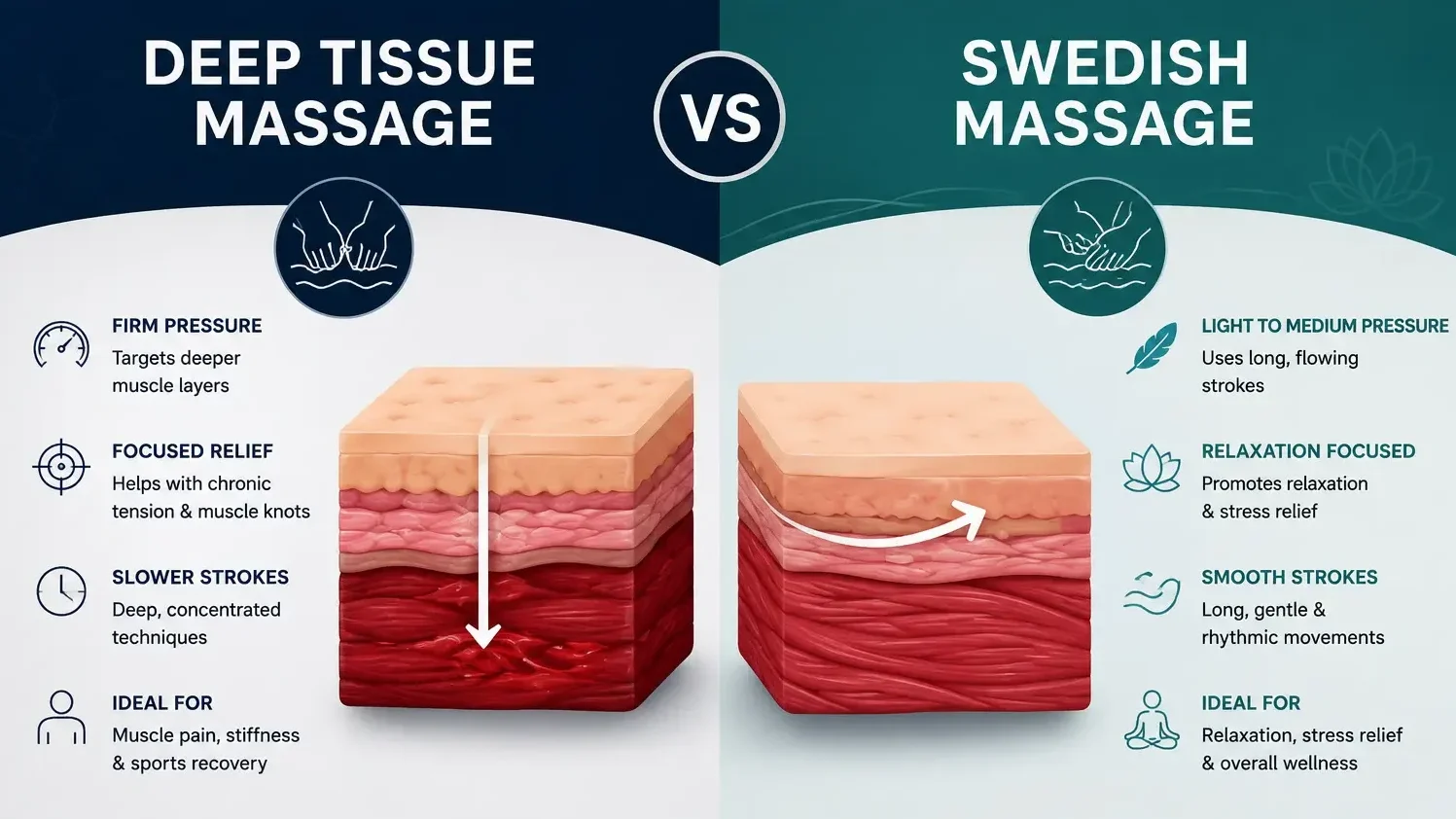
Deep Tissue Massage vs Swedish Massage at a Glance
| Feature | Swedish Massage | Deep Tissue Massage |
|---|---|---|
| Pressure | Light to moderate | Moderate to firm |
| Main focus | Relaxation & general tension | Deeper muscular tension |
| Technique | Long, flowing strokes | Slower, targeted pressure |
| Experience | Generally gentler | More intense |
| Good for | Relaxation, stress, general wellness | Persistent tightness & specific areas |
| Best choice when | You want a calming session | You want more targeted work |
The deciding factor when selecting deep tissue massage vs Swedish massage is actually knowing how each method works. Although both therapies are based on the manipulation of muscles and soft tissues, the nature of the pressure and the purpose of the manipulation are different and are of course intended to yield different results.
What is a Body Massage Swedish?
Swedish body massage is a full-body massage that is a gentle therapy for the relaxation of muscles. It is a type of therapy that is a full-body massage that encourages improved circulation. It is a type of therapy that uses long, flowing strokes as well as a kneading therapy that uses a circular motion along with gentle stretching to improve relaxation and encourage circulation.
This is a great restorative option for first massage clients, clients with light muscle tension, and clients looking for a soothing wellness option. Unlike other types of massage that can be more therapeutic and target-focused, Swedish massage promotes relaxation and therefore works on the more superficial layers of the muscles and promotes relaxation of the mind as well as the body.
How Does a Swedish Massage Work?
Swedish massages usually begin with a brief consultation. This helps the massage therapist to understand the client’s medical history, as well as their goals and expectations for the treatment. During the massage, the therapist uses a massage lotion or oil. Swedish massage is characterized by the use of long and flowing strokes.
This treatment is described as deeply relaxing and cozy by the majority of clients. The typical length of a Swedish massage is about 60 to 90 minutes, and during this time, the therapist works to release tension from the neck, shoulders, back, arms, legs, and feet.
Does the whole body get a Swedish massage?
Yes. A Swedish massage is traditionally a full-body treatment. This includes the back, shoulders, neck, arms, and legs. The treatment can be focused on the areas of your choice, and the therapist will be happy to make modifications.
Massage therapists will use different draping techniques to maintain their client’s comfort and modesty during the treatment.
Does a Swedish Massage Hurt?
A Swedish massage shouldn’t be a painful experience, and it should be a relaxing and soothing treatment. The pressure is typically light to moderate and can be adjusted but can cause mild soreness the next day for people who have tight or tense muscles.
It is important to inform your massage therapist of pain or discomfort during your massage so that appropriate adjustments can be made.
What is Deep Tissue Massage?
Deep tissue massage concentrates on deeper layers of muscle and connective tissue. This is not a relaxation massage—its purpose is to relieve chronic tension, increase range of motion, and help with persistent tight areas.
Deep tissue is especially common among athletes and active people, as well as people with chronic discomfort and tensions in the muscles.
Deep Tissue Massage vs Swedish Massage: What is the Difference?
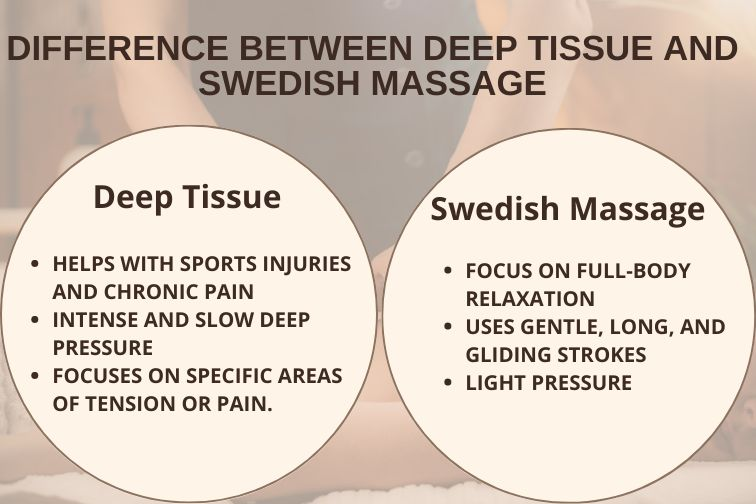
Deep tissue Massage vs Swedish massage is mainly distinguished by intent of the treatment.
Swedish massage focuses on techniques meant to be calming and built around the relief of tension and increase in circulation. Deep tissue massage assists with chronic tightness of muscles, increases range of motion, and works on deeper tension of muscles.
- Feature
- Swedish Massage
- Deep Tissue Massage
- Pressure
- Light to Moderate
- Moderate to Firm
- Purpose
- Relaxation and Wellness
- Chronic Muscle Tension
- Muscle Layers
- Superficial Muscles
- Deep Muscles and Fascia
- Best For
- Stress Relief
- Persistent Tightness
- Pain Level
- Minimal
- Moderate Discomfort Possible
- Recovery
- Usually Immediate
- Mild Soreness May Occur
With this understanding, you can more easily choose between a Swedish vs deep tissue massage based on your needs.
Benefits and Choosing the Right Massage
Now that you know the basic interior functions of Deep tissue massage vs swedish massage, you should decide which treatment best suits your lifestyle and explore the additional benefits of each.
Advantages of Swedish Massage
Swedish massage is beneficial for both the mind and body. This type of massage promotes circulation and muscle relaxation. This also aids the body’s natural healing processes.
- Benefits of Swedish massage include…
- Decreasing tension and anxiety
- Increased circulation
- Relaxation of tight muscles
- Greater range of motion
- Improved quality of sleep
- Decreased fatigue
- Increased wellness
- Improved lymphatic circulation
- Many people integrate Swedish massage into their self-care routine.
Healing Swedish Massage
While typical Swedish massage is great for relaxation, healing Swedish massage focuses more on the tension and stiffness of specific muscles. Therapeutic Swedish massage is still gentle, but is designed more for recovery and improvement of movement and the relief of discomfort of muscles.
Healing Swedish massage is especially good for people who work in an office, have tension due to bad posture, and have fatigue due to the daily stresses of life.
Swedish Massage for Relaxation
Of all the types of Swedish massage, the relaxation Swedish massage is the best for relaxing the nervous system and relieving stress. The gentle, yet rhythmic motions of the massage help to relax the muscles and promote an overall feeling of calm.
Swedish relaxation massage is also a good option for those who have a busy work life, have stress or emotional tension and have trouble sleeping, because it provides both physical relaxation and mental clarity.
Swedish Massage for Back Pain
Many people have the same question regarding Swedish massage: Can it relieve back pain? The response is that it all depends on why there is back pain to begin with.
Muscle aches and back discomfort from:
- Poor posture
- Sitting for too long
- Stress-related muscle tension
- Daily fatigue
Can all be helped with Swedish massage. It can help ease discomfort while improving circulation and mobility. It can also help relieve stiffness and tension in the back. It is important to see a doctor for an evaluation for back pain that is severe and/or has been persistent. This should happen before massage therapy is ever considered.
Swedish Massage and Pinched Nerves
Deep tissue massage vs swedish massage can both help with pinched nerves. A common question is can Swedish massage help with a pinched nerve?
It can help relax the muscles that are putting pressure on the nerve that are surrounding it if muscle tightness is the cause for the pressure. But it doesn’t help with the structural problems that can cause a pinched nerve like a bone spur or a herniated disk. It’s important to see a doctor for an evaluation for symptoms of pain that is severe and radiating along with numbness and/or weakness. This should happen before considering massage therapy.
Which Massage Should You Choose?
While both Deep tissue massage vs swedish massage can help achieve a health goal, here are some things to consider when choosing a Swedish massage:
- If you want to relax after a rough week
- If you want to help improve the quality of your sleep
- If you want to help alleviate the tension in your muscles on your body
- If you want a gentle full body massage
- If you are wanting to help support your overall health and wellness
- Then you should consider deep tissue massage:
- If you want to help assist with the tension in your muscles that are deep and tight
- If you want to help the range of motion in your body
- If you want to help the recovery of your body after a strenuous workout
- If you want to help the pain and discomfort that you have in your muscles that has been chronic and longstanding
- If you have muscular tension that is discomforting and is a concern to you and you want to help alleviate it
- If you want to focus on a specific area of your body
- If your goal is for relaxation of your muscles and to help improve circulation in your body, many skilled massage therapists will use a Swedish style of massage as a warm up.
Final Thoughts
When comparing deep tissue massage vs Swedish massage, there is no single option that is right for everyone. Swedish massage is generally a better match for relaxation and lighter pressure, while deep tissue massage may suit people looking for firmer, more focused work on tight areas.
The best choice depends on your personal preferences, comfort level, and reason for booking a massage. If you are visiting Jessie Jing Massage in Santa Rosa and are unsure which option to choose, you can discuss your goals with your therapist before the session.
Common Questions
Is a Swedish massage good for a beginner?
Absolutely. A Swedish massage is a great first option for someone trying massage therapy for the first time.
How often should a massage be received?
For overall wellness, a deep tissue massage vs Swedish massage is suggested to be received every 3 to 4 weeks. For those that are having chronic muscle tension, it can be received more frequently at the discretion of the therapist.
Is it okay to workout after a massage?
After a Swedish massage, light exercise is usually acceptable. After a deep tissue massage, it is suggested to wait before exercising to allow your muscles to recover.
Does Jess Jing Massage do both Swedish and deep tissue massage?
Yes. Jess Jing Massage has both deep tissue massage vs Swedish massage, so customers can choose which treatment best aligns with their wellness goals. Your massage therapist can help you select the best treatment based on your goals, comfort level, and stress and muscle tension.
Is a Swedish massage worse than a deep tissue massage?
Not necessarily. Swedish massage is more focused on relaxation, reduction of stress, and improvement of circulation. Deep tissue massage is more focused on chronic muscle tension, sports recovery, and improvement of mobility. The better option is more dependent on your goals, pain, and health rather than one of deep tissue massage vs Swedish massage dominating the other.